
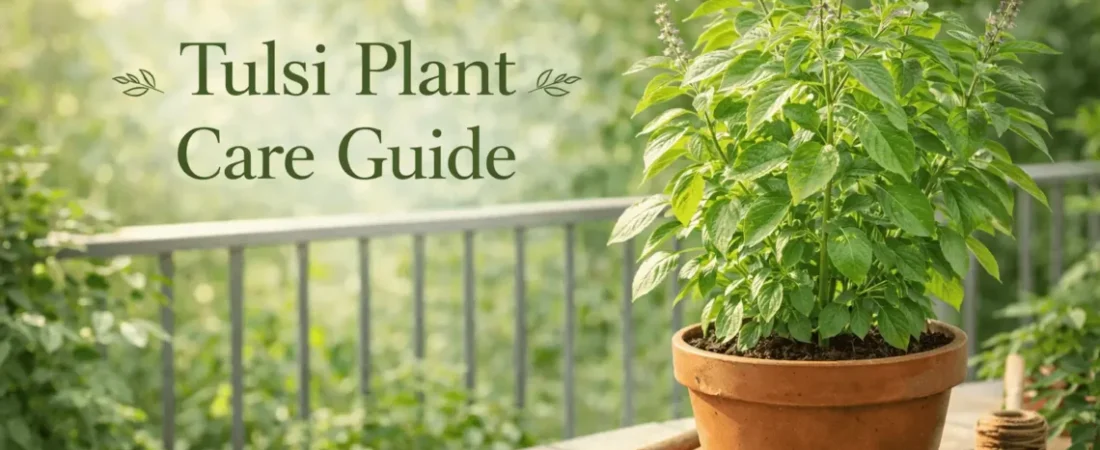
Tulsi Plant Care is simple once you understand what this sacred and useful herb loves: bright sunlight, warm weather, well-draining soil, careful watering, and regular pruning. Also known as Holy Basil, Tulsi is one of the most loved plants in Indian homes. It is grown for its fragrance, beauty, traditional value, and everyday usefulness in teas, home gardens, balconies, terraces, and small kitchen gardens.
If you are a beginner, Tulsi is a rewarding plant to start with. It grows fast, responds well to care, and can live happily in a pot when its basic needs are met. This complete guide explains how to grow Tulsi, how much sunlight it needs, how often to water it, which soil mix works best, how to prune it, and how to protect it from common problems.
Quick Care Guide for Tulsi Plant
| Care Need | Best Practice |
|---|---|
| Common name | Tulsi, Holy Basil |
| Botanical group | Ocimum species |
| Sunlight | 4 to 6 hours of direct morning sunlight daily |
| Watering | Water when the top 1 inch of soil feels dry |
| Soil | Loose, fertile, well-draining soil mix |
| Pot | 8 to 12 inch pot with drainage holes |
| Fertilizer | Compost or mild organic fertilizer every 3 to 4 weeks |
| Temperature | Warm range of about 18 to 35 degrees Celsius |
| Pruning | Pinch tips and remove flowers for bushier growth |
| Propagation | Seeds and stem cuttings |
Care tip: The most common Tulsi problem is not neglect, but overwatering. Give the plant sunlight and drainage, then water only when the top layer of soil begins to dry.
About Tulsi, Also Called Holy Basil
Tulsi is an aromatic herb widely grown in home gardens, courtyards, balconies, and temple spaces. It belongs to the basil family, but it has a stronger fragrance and a more upright, woody growth habit than many culinary basil varieties. In India, Tulsi is valued not only as a garden plant but also as a symbol of purity, wellness, and daily household tradition.
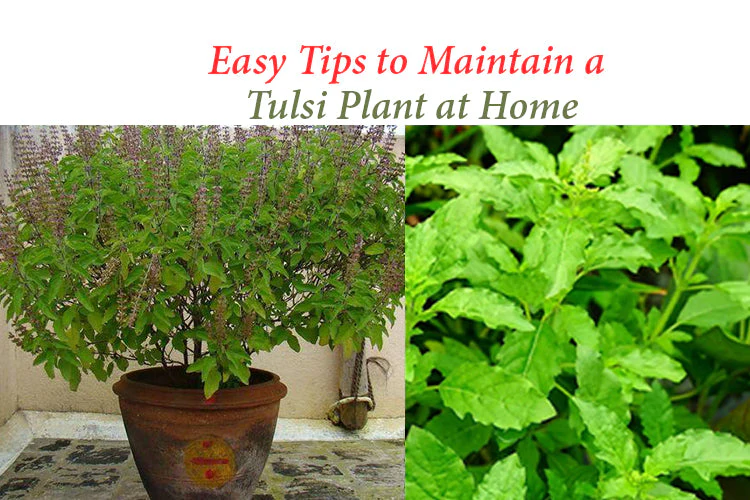
From a gardening point of view, Tulsi is a warm-season perennial in suitable climates. In colder regions or during harsh winters, it may behave like a short-lived annual unless protected. It grows with branching stems, small fragrant leaves, and flower spikes that appear when the plant matures. If you regularly pinch the tips and remove flowers, the plant becomes fuller and produces more leaves.
Holy Basil Care is not complicated, but the plant does not like extremes. It dislikes soggy soil, deep shade, cold winds, and heavy chemical feeding. Give it gentle care, organic nutrition, and enough light, and it will usually reward you with strong growth.
Types of Tulsi You Can Grow at Home
Several types of Tulsi are grown in home gardens. Their leaf color, aroma, taste, and growth style can vary, but their care needs are mostly similar.
Rama Tulsi
Rama Tulsi has bright green leaves and a pleasant, mild fragrance. It is one of the most common types for home gardens and often grows vigorously in warm weather. Beginners usually find Rama Tulsi easier because it adapts well to pots and regular pruning.
Krishna Tulsi
Krishna Tulsi has darker green to purple-tinted leaves and a stronger aroma. It is popular for traditional use and has an attractive ornamental look. The plant may grow slightly slower than Rama Tulsi, but it becomes beautiful and dense with proper sunlight.
Vana Tulsi
Vana Tulsi is often considered a wild or forest type. It can grow taller and may have a more robust habit when planted in open ground. If grown in a pot, choose a larger container and prune it regularly to keep the shape manageable.
Kapoor Tulsi
Kapoor Tulsi is fragrant, fast-growing, and often used for its pleasant aroma. It can flower quickly, so regular pinching is helpful if you want more leafy growth. It is a good choice for balconies where fragrance is part of the garden experience.
Tulsi Plant Benefits
Tulsi Plant Benefits are one reason this plant is so popular. Many people grow it for traditional herbal use, but it is also useful as a garden plant. Its fragrance, flowers, and easy growth make it valuable even for small spaces.
- Useful leaves: Fresh Tulsi leaves are commonly used in herbal tea and home preparations.
- Aromatic garden plant: The leaves release a warm, spicy fragrance when touched.
- Pollinator support: Tulsi flowers attract bees and other beneficial insects.
- Balcony friendly: It grows well in pots and does not need a large garden.
- Beginner friendly: It responds quickly to sunlight, pruning, and proper watering.
While Tulsi has a strong place in traditional wellness practices, this guide is focused on plant care and home gardening. If you plan to use Tulsi for health reasons, especially during pregnancy, illness, medication, or for children, it is best to ask a qualified health professional.
Tulsi Plant Sunlight Requirements
Tulsi Plant Sunlight is one of the biggest factors behind healthy growth. Tulsi loves bright light and grows best with 4 to 6 hours of direct sunlight every day. Morning sun is ideal because it is bright but not too harsh. If the plant receives only filtered light all day, it may survive, but the stems can become weak and stretched.
For balcony gardeners, an east-facing location is excellent. A south or west-facing balcony can also work, but in peak summer the afternoon heat may be too strong. If leaves curl, burn at the edges, or droop badly during hot afternoons, shift the pot where it receives morning sun and light shade later in the day.
- Best sunlight: 4 to 6 hours of direct morning sun.
- Acceptable light: Bright indirect light plus some direct sun.
- Avoid: Deep shade, dark corners, and closed rooms without sunlight.
Care tip: If your Tulsi plant is tall, thin, and leaning toward the window, it is asking for more light.
Tulsi Plant Watering Schedule
Tulsi Plant Watering should be based on soil dryness, not a fixed daily habit. Tulsi likes evenly moist soil, but it does not like standing water around the roots. The best method is simple: touch the top 1 inch of soil. If it feels dry, water deeply until extra water drains from the bottom. If it still feels moist, wait another day.
In hot summer, a potted Tulsi plant may need water daily or every other day, especially in terracotta pots. During monsoon or humid weather, it may need much less. In winter, growth slows down and the plant uses less water, so overwatering becomes a bigger risk.
Simple Watering Rule
- Check soil before watering.
- Water deeply, not just a few drops on the surface.
- Let excess water drain out fully.
- Never keep the pot sitting in a water-filled tray.
Yellowing leaves, blackened stems, fungus on soil, and a sour smell from the potting mix are warning signs of too much water. Crispy leaves, dry soil pulling away from the pot edge, and drooping that improves after watering usually indicate underwatering.
Best Soil Mix for Tulsi
The best soil for Tulsi is fertile, airy, and well-draining. Heavy garden soil can become compacted in pots, blocking air around the roots. A good Tulsi mix should hold some moisture but still drain quickly after watering.
Recommended Potting Mix
- 40 percent garden soil or red soil
- 30 percent compost or vermicompost
- 20 percent cocopeat or leaf mold
- 10 percent river sand, perlite, or small brick chips for drainage
If your local soil is clay-like and sticky, increase the drainage material. If your climate is very hot and dry, a little more cocopeat can help the mix stay moist longer. For organic gardening, compost and leaf mold are excellent because they improve soil life while feeding the plant gently.
Fertilizer Recommendations for Holy Basil Care
Tulsi does not need strong fertilizer. In fact, too much chemical fertilizer can produce weak, soft growth and reduce the natural aroma of the leaves. Mild organic feeding is better for steady growth.
- Add a handful of compost or vermicompost every 3 to 4 weeks during active growth.
- Use diluted seaweed extract or compost tea once a month if the plant looks weak.
- Avoid heavy nitrogen fertilizer, especially in small pots.
- Do not fertilize a stressed, dry, or diseased plant until it recovers.
Before adding fertilizer, gently loosen the top soil, add compost around the plant, and water lightly. Keep compost away from direct contact with the main stem to reduce rot risk.
Temperature and Humidity
Tulsi grows best in warm weather. A comfortable range is about 18 to 35 degrees Celsius. It can tolerate heat if watered correctly and protected from harsh afternoon sun, but it struggles in cold weather. Cold winds, frost, and very low night temperatures can damage leaves and slow growth.
Humidity is usually not a problem unless air circulation is poor. During monsoon, high humidity combined with wet soil can lead to fungal disease. Keep the plant in an airy place, avoid overcrowding pots, and remove fallen leaves from the soil surface.
Pot Selection and Repotting
Choose a pot with drainage holes. This is more important than the pot material. Terracotta pots are excellent because they allow air movement and reduce waterlogging, but plastic pots also work if you water carefully.
- For a young Tulsi plant, start with a 6 to 8 inch pot.
- For a mature plant, use an 8 to 12 inch pot.
- For Vana Tulsi or a large bushy plant, use a deeper container.
Repot Tulsi when roots come out of the drainage holes, water runs through too quickly, or growth slows even with good care. The best time to repot is during warm active growth, not during cold winter. Move the plant to a pot only one size larger, refresh the soil mix, water it, and keep it in bright indirect light for a few days before returning it to full sun.
Pruning Tips for a Bushy Tulsi Plant
Pruning is one of the easiest ways to keep Tulsi healthy and attractive. If you allow the plant to grow without pruning, it may become tall, woody, and less leafy. When you pinch the top growing tips, side branches develop and the plant becomes fuller.
How to Prune Tulsi
- Start pinching when the plant is about 6 to 8 inches tall.
- Cut just above a pair of leaves to encourage branching.
- Remove dry, yellow, or diseased leaves regularly.
- Remove flower spikes if you want more leaf growth.
- Use clean scissors to avoid spreading disease.
Care tip: Do not remove more than one-third of the plant at one time. Light, regular pruning is better than hard cutting after long neglect.
Common Pests and Diseases
A healthy Tulsi plant is usually resilient, but pests and diseases can appear when the plant is stressed. Poor sunlight, overwatering, compact soil, and weak air circulation are common triggers.
Common Pests
- Aphids: Small insects on soft new growth. Wash with water and use mild neem spray if needed.
- Mealybugs: White cotton-like pests near leaf joints. Remove with a cotton swab dipped in diluted soap water.
- Whiteflies: Tiny white insects that fly when leaves are disturbed. Improve airflow and use yellow sticky traps.
- Spider mites: Fine webbing and dusty leaves, often in hot dry weather. Rinse leaves and increase humidity slightly.
Common Diseases
- Root rot: Caused by soggy soil. Reduce watering and improve drainage.
- Leaf spots: Often linked to fungal issues. Remove affected leaves and avoid wetting foliage at night.
- Powdery mildew: White powdery patches on leaves. Improve air movement and avoid overcrowding.
Neem oil can help with many pests, but use it carefully. Spray in the evening, dilute properly, and avoid spraying during strong sunlight. Test on a few leaves first because stressed plants may react badly to any spray.
How to Grow Tulsi from Seeds
If you are learning How to Grow Tulsi, seeds are an affordable and satisfying method. Tulsi seeds are small, so they should not be buried deeply.
- Fill a seed tray or shallow pot with light potting mix.
- Moisten the soil before sowing.
- Sprinkle seeds on the surface and cover with a very thin layer of soil.
- Keep the tray in bright indirect light.
- Mist gently so seeds are not washed away.
- Seedlings usually appear in 1 to 2 weeks in warm weather.
- Transplant when seedlings have several true leaves.
Do not overcrowd seedlings. Select the strongest ones and move them into individual pots. Give young plants morning sunlight gradually so they do not burn after being raised in shade.
How to Grow Tulsi from Cuttings
Stem cuttings are faster than seeds and help you grow a plant similar to the parent Tulsi. Choose a healthy, non-flowering stem for best results.
- Cut a 4 to 6 inch healthy stem below a leaf node.
- Remove leaves from the lower half of the cutting.
- Place the cutting in water or a moist potting mix.
- Keep it in bright indirect light, not harsh sun.
- Change water every few days if rooting in water.
- Plant in soil once roots are about 1 to 2 inches long.
Cuttings can wilt at first, so keep them protected from wind and heat. Once new growth appears, gradually introduce more sunlight.
Seasonal Tulsi Plant Care
Summer Care
Summer is a strong growing season for Tulsi, but heat can dry pots quickly. Water early in the morning, protect from extreme afternoon sun, and mulch the top soil with dry leaves or compost to reduce moisture loss. If leaves droop during the hottest hours but recover by evening, the plant may simply be reacting to heat. If it stays droopy, check the soil.
Monsoon Care
During monsoon, the main risk is excess water. Move potted Tulsi away from continuous rain if the soil remains wet for too long. Make sure drainage holes are open. Remove yellow leaves and keep the plant airy to reduce fungal issues.
Winter Care
Winter can slow Tulsi growth. Place the pot in the sunniest warm spot available. Reduce watering and avoid heavy pruning during cold weather. If nights are very cold, move the plant indoors near a bright window or protect it from cold winds. Do not keep it in a dark room for many days, as weak light can cause leaf drop.
Common Mistakes to Avoid
- Overwatering: Daily watering without checking soil can cause root rot.
- Growing in shade: Lack of sunlight makes Tulsi weak and leggy.
- No drainage holes: A decorative pot without drainage is risky for Tulsi.
- Ignoring pruning: Unpruned plants become tall, woody, and less productive.
- Too much fertilizer: Heavy feeding can lead to soft growth and pest attacks.
- Spraying in hot sun: Neem or soap sprays can burn leaves in direct sunlight.
- Repotting in cold weather: Repot during warm active growth for faster recovery.
Internal Plantary Guides to Explore
If you enjoy growing Tulsi, you may also like related Plantary topics. Explore more in Plant Care for beginner-friendly care guides, Gardening Tips for practical home garden advice, and Indoor Plants for plants that can brighten smaller spaces.
Frequently Asked Questions About Tulsi Plant Care
1. How much sunlight does a Tulsi plant need?
Tulsi grows best with 4 to 6 hours of direct sunlight daily. Morning sunlight is ideal because it supports strong growth without the stress of harsh afternoon heat.
2. Should I water Tulsi every day?
Not always. Water when the top 1 inch of soil feels dry. In summer this may be daily, but in cool or rainy weather it may be every few days.
3. Why are my Tulsi leaves turning yellow?
Yellow leaves can be caused by overwatering, poor drainage, lack of sunlight, nutrient deficiency, or natural aging. Check soil moisture and drainage first.
4. Can Tulsi grow indoors?
Tulsi can grow indoors only if it receives strong sunlight near a bright window or under suitable grow lights. A dark indoor corner is not enough.
5. What is the best soil for Tulsi?
A loose, fertile, well-draining mix is best. Use garden soil, compost, cocopeat or leaf mold, and sand or perlite for drainage.
6. How do I make my Tulsi plant bushy?
Pinch the top growing tips regularly and remove flower spikes. This encourages side branching and more leaf growth.
7. Why is my Tulsi plant dying after repotting?
Repotting shock can happen if roots are disturbed, the new pot is too large, or the plant is placed in harsh sun immediately. Keep it in bright indirect light for a few days after repotting.
8. Can I grow Tulsi from cuttings?
Yes. Take a healthy 4 to 6 inch stem cutting, remove lower leaves, and root it in water or moist soil. Plant it once roots develop.
9. Should Tulsi flowers be removed?
If you want more leaves and bushy growth, remove flower spikes early. If you want seeds or pollinator activity, allow some flowers to remain.
10. Which fertilizer is best for Tulsi?
Compost, vermicompost, diluted compost tea, or mild organic fertilizer works well. Avoid heavy chemical feeding.
11. Why are Tulsi leaves curling?
Leaf curling may happen due to heat stress, underwatering, pests, or strong direct afternoon sun. Check soil, leaf undersides, and the plant location.
12. Can Tulsi survive winter?
Tulsi struggles in cold weather. In winter, keep it in the warmest sunny spot, reduce watering, and protect it from cold winds.
13. How often should I prune Tulsi?
Light pruning every 1 to 2 weeks during active growth is helpful. Remove only small portions at a time and avoid hard pruning in winter.
14. Is Tulsi good for balconies?
Yes. Tulsi is excellent for balconies if it gets sunlight, airflow, and a pot with drainage holes. East-facing balconies are especially good.
15. What is the easiest Tulsi type for beginners?
Rama Tulsi is often easy for beginners because it grows quickly, adapts well to pots, and responds nicely to pruning.
Conclusion
Tulsi is a beautiful, meaningful, and useful plant for almost every home garden. With the right sunlight, careful watering, airy soil, mild organic feeding, and regular pruning, your Holy Basil plant can stay healthy and productive for a long time. The key is to observe the plant: dry soil asks for water, weak stems ask for light, and tall woody growth asks for pruning.
Whether you grow it on a terrace, balcony, windowsill, or in a courtyard, Tulsi brings fragrance and freshness to the space. Start with one healthy plant, follow this care routine, and you will quickly understand why Tulsi has remained a favorite in home gardens for generations.
Want more simple plant care guides? Explore more beginner-friendly articles on Plantary and continue learning how to grow healthier plants at home.